The Japan Times - In Norway's Arctic, meteorologists have a first-row seat to climate change

EUR -
AED 4.315152
AFN 77.708509
ALL 96.852138
AMD 448.491142
ANG 2.103707
AOA 1077.46608
ARS 1692.867744
AUD 1.766731
AWG 2.114983
AZN 1.996065
BAM 1.958827
BBD 2.365606
BDT 143.531799
BGN 1.957646
BHD 0.442923
BIF 3471.553207
BMD 1.174991
BND 1.516883
BOB 8.115541
BRL 6.345419
BSD 1.17454
BTN 106.215586
BWP 15.56238
BYN 3.462451
BYR 23029.817846
BZD 2.36217
CAD 1.617428
CDF 2631.978985
CHF 0.93526
CLF 0.027299
CLP 1070.885484
CNY 8.288974
CNH 8.27372
COP 4466.84467
CRC 587.522896
CUC 1.174991
CUP 31.137254
CVE 110.435656
CZK 24.285177
DJF 209.15766
DKK 7.470444
DOP 74.667289
DZD 152.34334
EGP 55.789738
ERN 17.624861
ETB 183.52108
FJD 2.648192
FKP 0.879185
GBP 0.877671
GEL 3.168367
GGP 0.879185
GHS 13.482835
GIP 0.879185
GMD 85.774311
GNF 10213.261358
GTQ 8.995863
GYD 245.719709
HKD 9.144171
HNL 30.922442
HRK 7.532747
HTG 153.951832
HUF 385.151393
IDR 19592.088787
ILS 3.766621
IMP 0.879185
INR 106.613135
IQD 1538.577555
IRR 49493.544354
ISK 148.41283
JEP 0.879185
JMD 188.054601
JOD 0.833059
JPY 182.086549
KES 151.515079
KGS 102.752804
KHR 4702.386633
KMF 492.911492
KPW 1057.491268
KRW 1720.480396
KWD 0.36051
KYD 0.978813
KZT 612.546565
LAK 25462.346819
LBP 105176.728999
LKR 362.920819
LRD 207.301224
LSL 19.815521
LTL 3.469442
LVL 0.710741
LYD 6.379995
MAD 10.805297
MDL 19.854766
MGA 5203.151106
MKD 61.58937
MMK 2466.617904
MNT 4166.358748
MOP 9.418054
MRU 47.004836
MUR 53.990968
MVR 18.088629
MWK 2036.690621
MXN 21.126092
MYR 4.808648
MZN 75.093803
NAD 19.815521
NGN 1705.53442
NIO 43.227904
NOK 11.911281
NPR 169.94896
NZD 2.027652
OMR 0.451782
PAB 1.174515
PEN 3.954311
PGK 5.062068
PHP 69.231624
PKR 329.162758
PLN 4.221642
PYG 7889.359242
QAR 4.280496
RON 5.094291
RSD 117.388641
RUB 92.967943
RWF 1709.478019
SAR 4.40866
SBD 9.607607
SCR 17.223335
SDG 706.756952
SEK 10.910905
SGD 1.51451
SHP 0.881547
SLE 28.346692
SLL 24638.971924
SOS 670.04968
SRD 45.293589
STD 24319.935326
STN 24.534259
SVC 10.276881
SYP 12991.498391
SZL 19.808863
THB 36.931722
TJS 10.793679
TMT 4.124217
TND 3.433491
TOP 2.829096
TRY 50.173396
TTD 7.970316
TWD 36.798371
TZS 2916.912694
UAH 49.627044
UGX 4174.450755
USD 1.174991
UYU 46.090635
UZS 14149.865707
VES 314.239221
VND 30925.755393
VUV 142.323844
WST 3.261166
XAF 656.986216
XAG 0.018396
XAU 0.000271
XCD 3.175471
XCG 2.116771
XDR 0.81708
XOF 656.986216
XPF 119.331742
YER 280.241445
ZAR 19.712468
ZMK 10576.317779
ZMW 27.102111
ZWL 378.346528
  • SCS

    0.0200

    16.14

    +0.12%

  • CMSC

    -0.1300

    23.3

    -0.56%

  • BCE

    0.3100

    23.71

    +1.31%

  • BTI

    -1.2700

    57.1

    -2.22%

  • NGG

    0.2400

    74.93

    +0.32%

  • JRI

    -0.0200

    13.7

    -0.15%

  • RIO

    -1.0800

    75.66

    -1.43%

  • GSK

    -0.0700

    48.81

    -0.14%

  • BCC

    0.2500

    76.51

    +0.33%

  • RBGPF

    0.0000

    81.17

    0%

  • BP

    -0.2700

    35.26

    -0.77%

  • AZN

    -0.4600

    89.83

    -0.51%

  • RYCEF

    -0.2500

    14.6

    -1.71%

  • CMSD

    -0.1500

    23.25

    -0.65%

  • RELX

    0.1000

    40.38

    +0.25%

  • VOD

    0.0500

    12.59

    +0.4%

In Norway's Arctic, meteorologists have a first-row seat to climate change
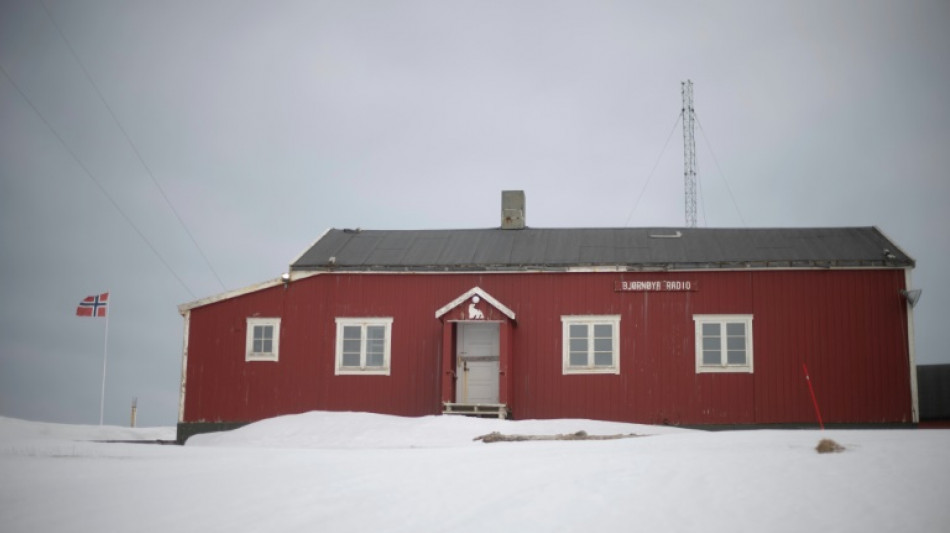
In Norway's Arctic, meteorologists have a first-row seat to climate change / Photo: Olivier MORIN - AFP

In Norway's Arctic, meteorologists have a first-row seat to climate change

In the cold of the Norwegian Arctic, meteorologist Trond Robertsen manually recorded precipitation levels for over two decades, witnessing firsthand the effects of climate change.

Text size:

At 66, Robertsen retired after enduring spartan conditions during missions that totalled eight years on two islands of the Svalbard archipelago: Bjornoya (Bear Island) and Hogen.

To reach the remote Bjornoya, where the only humans are the nine employees of the small weather station, the meteorologists have to fly in by helicopter as they are rotated on a six-month basis.

"The idea is to not stay too long, because it's a different rhythm, and you are isolated," Robertsen told AFP.

It is demanding work.

"It's a 24/7 occupation," he said. "We are doing it all day, all night." The team worked shifts to cover all hours of the day, he explained.

Weather observation starts in the early morning at 6:00 am.

"It's manually done, then you have to go outside and check the bucket that is collecting precipitation," said Robertsen.

"During wintertime you have to melt the snow and ice into water" to determine how much has fallen.

The data is then transmitted the Norwegian Meteorological Institute in Tromso and Oslo.

"This tiny little observation is actually quite crucial for the weather forecasting systems up north, because observations are so sparse from that area."

Bjornoya sits in the middle of fishing grounds, and the weather reports published twice a day are closely followed by the fishing boats in the area.

- Less ice, fewer bears -

Since his first missions to the Arctic in the 1990s, Robertsen has witnessed the changing climate.

"When I started going up north, there was a lot of ice. In the later years, it's less ice and fewer polar bears. You can see the climate change," he said.

Polar bears have been classified as a vulnerable population since 1982 on the IUCN (International Union for Conservation of Nature) Red List of Threatened Species, with the loss of Arctic sea ice the most pressing threat against the species.

However, their precise numbers, are almost impossible to assess.

In winter, employees of station always venture out in pairs and have to be armed due to the presence of polar bears, but according to Robertsen it's rarer to encounter them today.

In April, during his last mission to the island, Robertsen had an accident while doing carpentry: he slipped and ended up cutting one finger clean off and half of another.

Due to tough weather conditions, he had to wait some 26 hours before being evacuated by helicopter and transported to a hospital.

"It was a heavy snowstorm coming in, only the day after the helicopter came," he recounted.

Looking back, Robertsen does not regret the years spent under the austere living conditions.

"The Arctic has given me so many experiences and memories so it is a small fee to pay back with my left little finger and part of my ring finger," he said.

T.Ikeda--JT